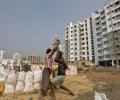
With the arrival of the second Covid wave in April, the numbers fell by almost 50 per cent.

In 2020, after the outbreak of the Covid-19 pandemic, several five-star hotel chains commenced home delivery of food as a lot of people preferred to stay indoors. A year later, as the Covid situation worsens, such hotels are going the extra mile to cater for the gastronomical needs of their customers. With health, nutrition, and immunity occupying the mind spaces, these hotels are crafting menus that are not only high on health quotient, but also have food capable of improving the mood. The move, they hope, would help them get more customers as prices are also competitive.

From helping their employees infected with the Covid-19 virus to vaccinating them or supporting the families of those who might have succumbed to the infection, several companies in India are trying to do their bit in this difficult time. Some have even widened their support net to include all stakeholders as well as an extended community. To the families of the employees it lost to Covid-19, Noida-headquartered IT services and consulting company HCL Technologies is, for instance, paying salary for a year, medical insurance for three years and extending support for their children's education for five years.
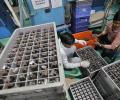
Auto component makers in India are bracing for a tough time. High absenteeism among workers owing to Covid-19, shortages of critical parts, and temporary closures of plants by automobile manufacturers have thrown a spanner in the works for the Rs 3.2-trillion sector, which derives 60 per cent of its revenues from automobile original equipment manufacturers (OEMs), with the balance split equally between replacement demand and exports. Car market leader Maruti Suzuki India on Saturday said it was extending the maintenance shutdown, which was from May 1 to 9, till May 16, "keeping in view the current pandemic situation". Some activities will continue in the plants.

Consultants who help lease these properties say this is the steepest decline at least in a decade.

Since April, India has seen multiple strains of the coronanavirus sweep the nation, upending life and businesses alike. Out-of-home retail and discretionary categories such as durables, auto, fashion, lifestyle, hospitality, food services, travel, and tourism have been the worst-hit as Covid cases remain high, leaving state governments with no option but to curtail mobility and economic activity.
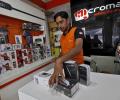
According to research firm IDC, a slowdown in smartphone shipments began showing up as early as late February, though companies insist that the March quarter was fine, albeit on a low base.

'I remain optimistic that 2021 will be better than 2020 because we have visibility of vaccinations this year.'
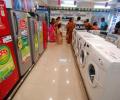
Some companies argue that the culture of staying, working and learning at home will persist for a while, altering lifestyle habits of consumers.

Close to 60 per cent models that Kia sells in India are top trims of the models. In line with its global strategy, the India arm of South Korean major Kia has dropped 'Motors' from its name. This is to reflect the transition from an automaker to a provider of advanced and eco-friendly mobility solutions, the company said. With a new brand identity and slogan, the fourth-largest car maker in India by sales aims to accelerate growth and strengthen its premium positioning.
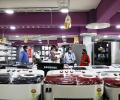
Durable goods companies and retailers say online sales won't compensate for the fall in offline sales.
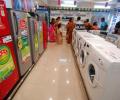
Maharashtra, which contributes between 12 and 15 per cent of appliances sales, announced lockdown-like curbs, meaning there will be no business for the second half of the month as well from the state.

GM cites global pandemic as reason for the step. Firm had stopped selling cars in India in 2017 and stopped production completely on December 24, 2020.

'Post-Covid world will be different from the pre-Covid world.'

On Day One of the lockdown announced by the Maharashtra Government, it wasn't business as usual for automobile manufacturing units in the State. Confusion prevailed over regulations-what is allowed and what isn't. While some units ran with less than half the workforce, others sought clarity from the government on what is permissible and what isn't.

According to the order, all factories producing essential goods and services will remain operational at full capacity.

The five-year (2015-16 to 2020-21, or FY21) compound annual growth rate (CAGR) of the overall auto industry is now negative at 2 per cent, against 5.7-per cent growth it saw in the previous five years (from 2010-11 to 2015-16).
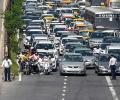
The lockdown in Maharashtra will have a catastrophic impact on April sales, as dealers will not be able to realise the potential of festivities like Ugadi, Gudi Padwa, Baisakhi and Poila Boishakh.

'I see a virtually zero impact on the sales of new vehicles with this move,' said an expert

India Inc's cash pile was up 13.8 per cent last fiscal year, thanks to a combination of higher profits in sectors such as IT and fund raising by top companies such a Reliance Industries, Bharti Airtel and Tata Motors, among others.
 © 2026 Rediff.com - Advertise with us - Disclaimer - Privacy Policy - Sitemap - Feedback - About us - Terms of use - Grievances